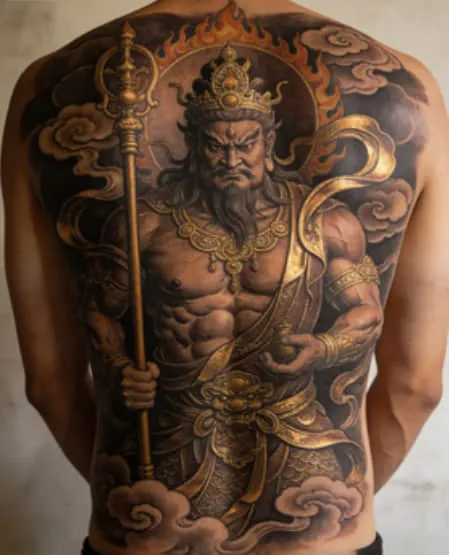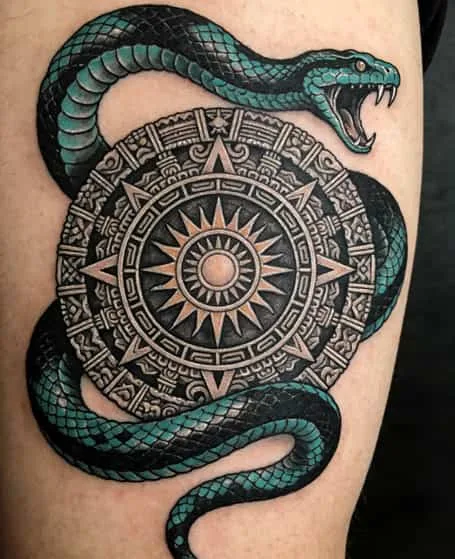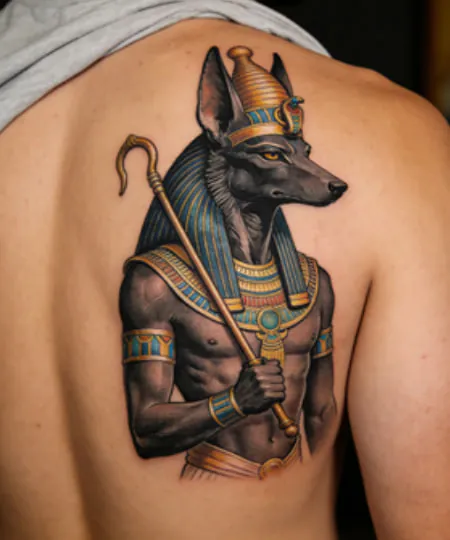
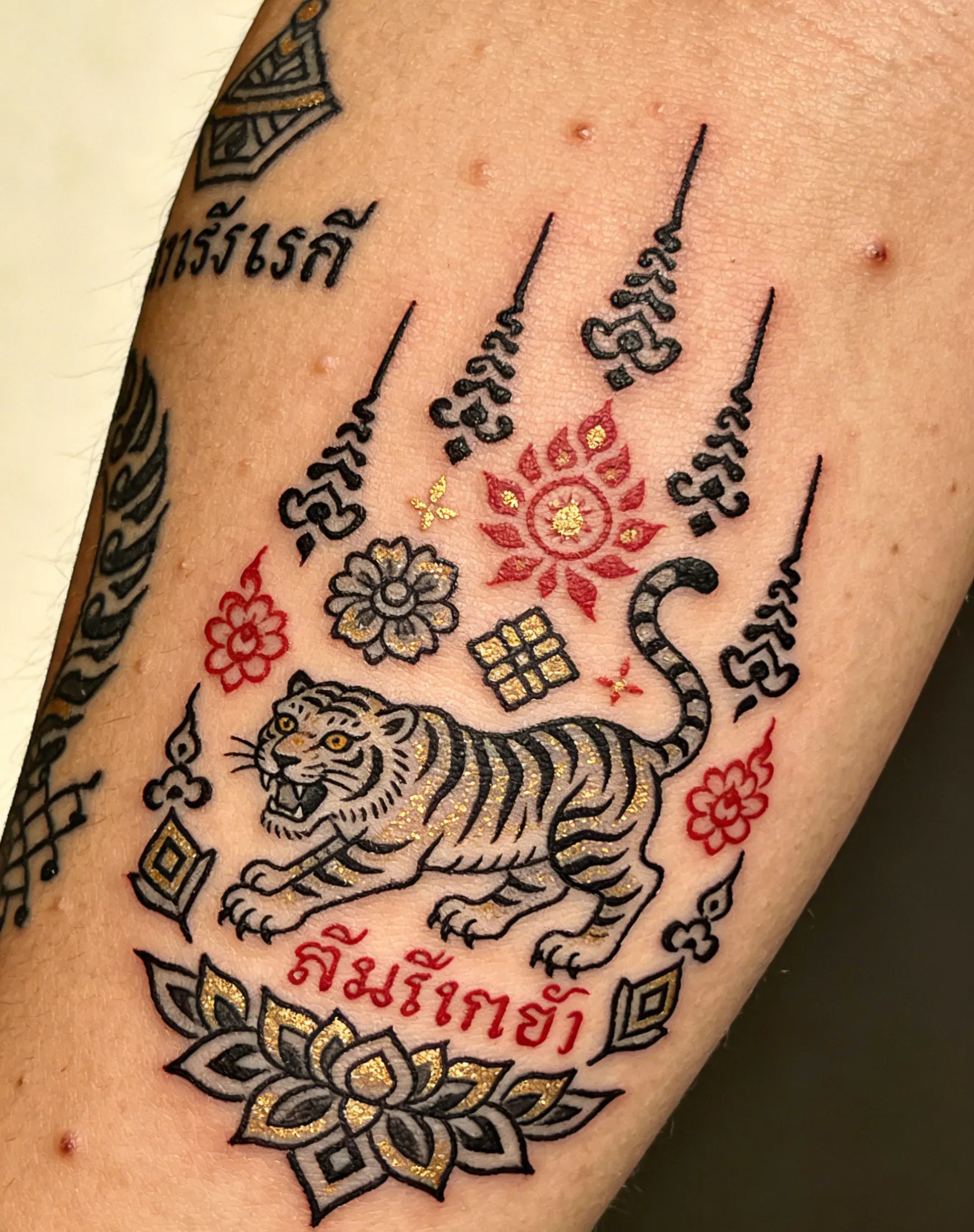
I’ve always been fascinated by Sak Yant. You know, those tattoos with super complex geometric patterns. And those monks in robes chanting sutras while tattooing you—the whole process feels so mysterious. Now it’s all the rage, especially since Angelina Jolie got one—they’re everywhere. But for me, this isn’t about following trends. I just want to know: What I really wanted to understand was whether this belief has any real impact in daily life.
What is Sak Yant? It’s more than just a design.
First, we need to understand what Sak Yant truly is. It’s not just an ordinary tattoo; it’s a sacred form of body art originating from Thailand and other Southeast Asian countries. Its roots lie in Buddhism, Hinduism, and ancient animistic beliefs. So, don’t mistake it for mere skin decoration.
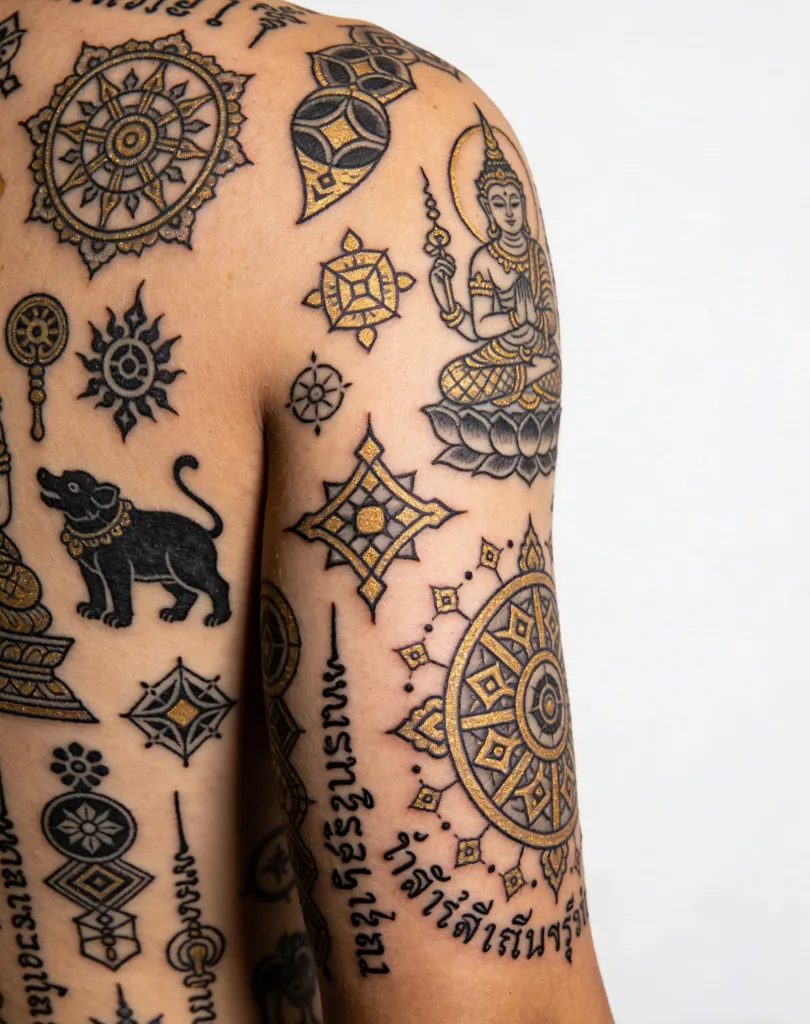
Each Sak Yant design, called a “Yantra” in Thai, carries a specific wish or blessing. People believe that getting it tattooed grants them special spiritual protection or benefits.
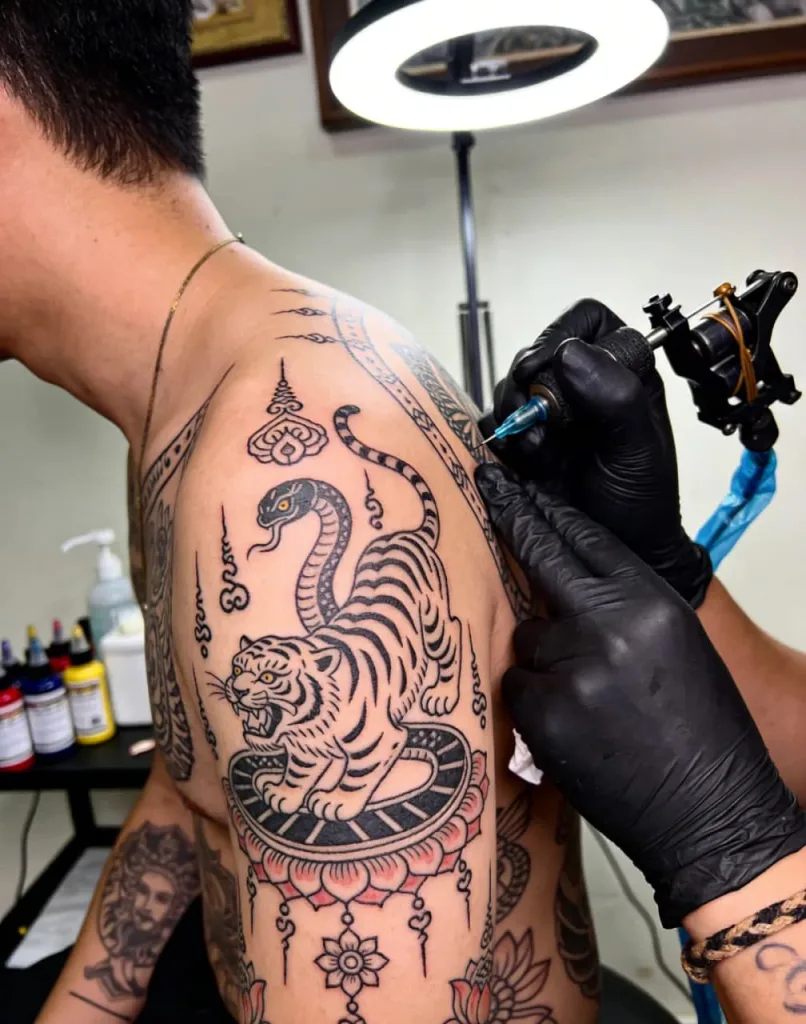
Here’s a crucial distinction: ‘Meaning’ and “Power” are not the same thing.
- “Meaning” refers to the specific purpose of the design. For example, does it enhance your charm? Bring great wealth? Or grant invulnerability?
- ‘Power’ refers to the actual effectiveness you experience in your life.
Different designs carry different meanings, so the “superpowers” they activate vary completely.
Here are some common examples:
- Metta Mahaniyom (Loving-Kindness Yantra): Primarily enhances your social appeal, making you well-liked wherever you go and instantly approachable to others. Its “power” manifests in social settings.
- Klaew Klaad (Protection Yantra): This one is formidable, specifically designed for self-defense. Legend says it helps you dodge danger and avoid serious injury. Its “power” is pure defensive strength, something meant to reduce risk rather than eliminate danger entirely.
- Chok Lap (Wealth Yant): As the name suggests, it’s for attracting wealth. It’s meant to bring good fortune, riches, and business prosperity. Its “power” is reflected in how full your wallet is.
- Ha Taew (Five-Line Yant): This is a “family bundle,” with five lines representing five distinct blessings—typically health, wealth, popularity, ambition, and protection. It’s all-purpose, like a universal amulet.
The design alone is useless; the ritual is the soul.
So the question arises: Why do some people feel the same design is powerful, while others see it as mere psychological comfort?
The secret lies not in the design itself, but in the entire ritual performed during tattooing. This is the true key that determines the “strength” of the tattoo.
First, the mantra (Kata) is the switch.
Each Sak Yant comes with a specific Pali mantra. The master (called Ajarn) performing the tattoo will chant this mantra repeatedly during and even after the process. This is like “energizing” your tattoo, activating it. For a charm pattern, you chant the charm mantra; for protection, you chant the defensive mantra. Different mantras attract different “energies”[[10]].
Second, the master’s (Ajarn) skill matters greatly.
The spiritual cultivation and personal prestige of the master performing your tattoo directly determine its potency. A master renowned for protective symbols may create a Klaew Klaad that is significantly more “powerful” than one done by a master specializing in wealth symbols. It’s like buying a phone—both the brand and the craftsman’s skill are crucial.
Third, you must uphold moral discipline (Sila).
This is the most overlooked point! Getting a Sak Yant tattoo isn’t a one-time deal. You must adhere to fundamental ethical precepts—no lying, no excessive drinking, honoring your parents, and so on. It’s widely believed that if your conduct is unworthy, even the most potent amulet will lose its power gradually or become completely ineffective. Simply put, the divine only aids those worthy of help.
So the real question becomes how this belief functions in real life.
Alright, after all this discussion, back to the original question: Is it effective?
Honestly, after getting the tattoo, lightning won’t strike from the sky immediately, nor will you win the lottery right away. At least, I haven’t experienced that.
But! When I left, I felt an indescribable sense of peace. I gradually understood that Sak Yant’s protection isn’t like a golden shield shielding you from the outside world. It feels more like a quiet reminder that stays with you over time., constantly reminding you.
Every time I look in the mirror and see it (or even when I can’t see it but know it’s there), I remember the promises I made to myself, the rules I vowed to follow.
Slowly, I truly changed. Not dramatically, not overnight—but enough for me to notice. Under pressure, I don’t snap as easily. When conflict arises, I instinctively choose to step back. At some point, I stopped trying to separate spiritual belief from psychological change. Honestly, I don’t care about the answer anymore. Because the result is the same—my life has genuinely improved.
Protection, in truth, begins from within. Sak Yant’s “power” lies in how it forces you to maintain mindfulness, compelling you to steer clear of the very pitfalls that once tripped you up. It isn’t a passive shield but an active moral contract—one that demands lifelong commitment.
Ah, thinking about it now, I suddenly feel that having such a “cheat code” in life wouldn’t be so bad—at least it keeps reminding me not to act foolishly.
Whether someone believes it or not probably depends on how they view faith itself. And I’m already scheming about which design to choose for my next Sak Yant.
Recommended reading: The Meaning of Angel Number Tattoos