Have you ever wondered why so many people want a tengu tattoo these days?
Is it just because the design looks cool?
Or because the ancient story behind it is pretty intriguing?
Lately I’ve been obsessed with this—spent an entire weekend bingeing on ancient myths, scrolling through tattoo galleries, and constantly asking myself: What if I got a tengu tattoo? How would people see me then?
Today, I’ll break it down for you in the simplest terms.
Who is the Tengu? Not a dog, nor a bird!
First, don’t be fooled by the name. “Tengu” sounds like a dog, but it has little to do with canines.
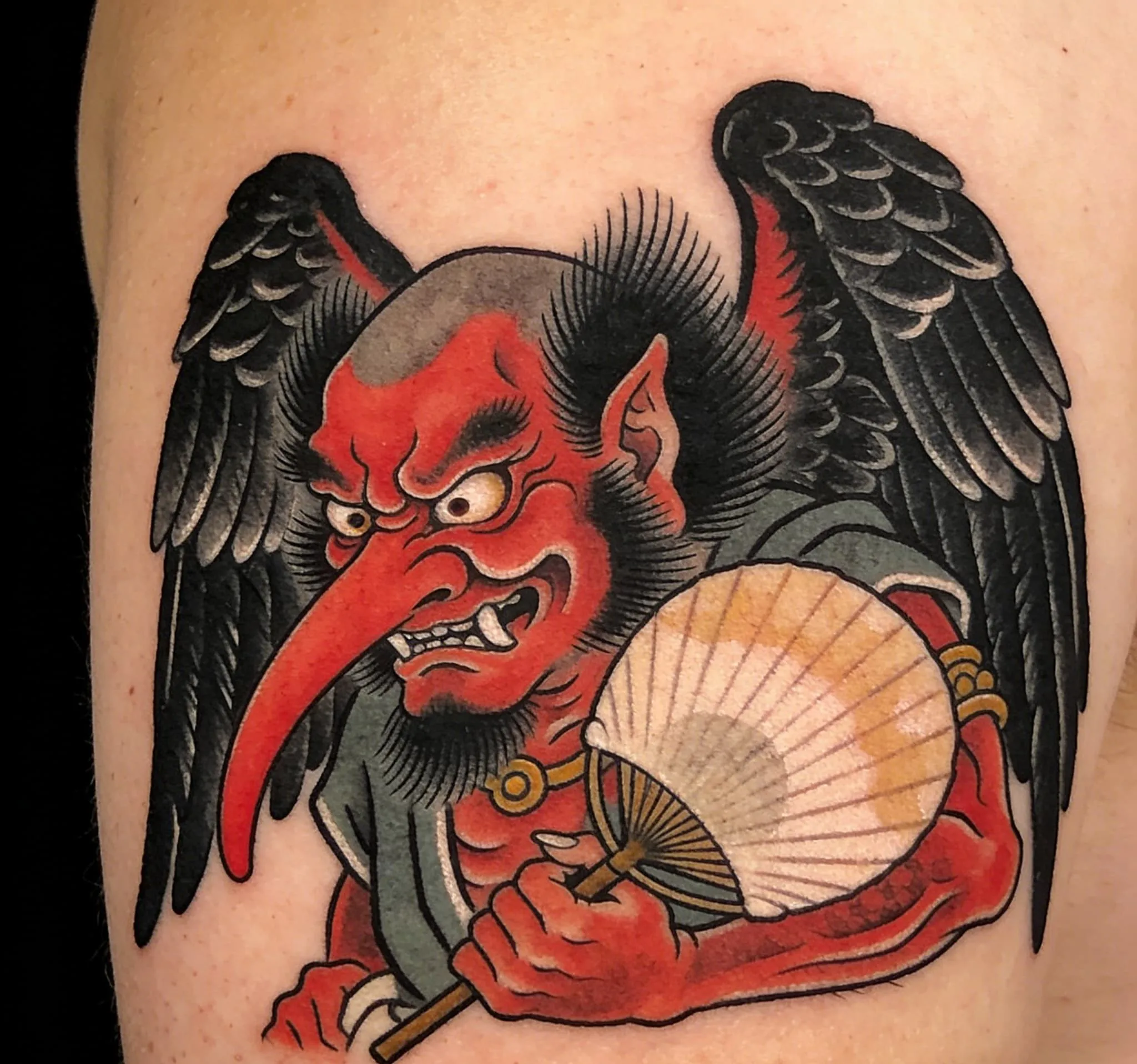
In Japanese folklore, tengu are strange mountain spirits that live far from ordinary towns and people. They have human bodies but bird-like features—like wings, sharp beaks, or long, red faces with exceptionally long noses.
What surprised me most is that tengu aren’t just one single creature—there are different types.
- Great Tengu: Tall and imposing, dressed in ancient ascetic robes with an exceptionally long nose. They’re often portrayed as wise, strict, and almost monk-like—kind of like the “senior masters” among tengu, famous for martial arts lore.
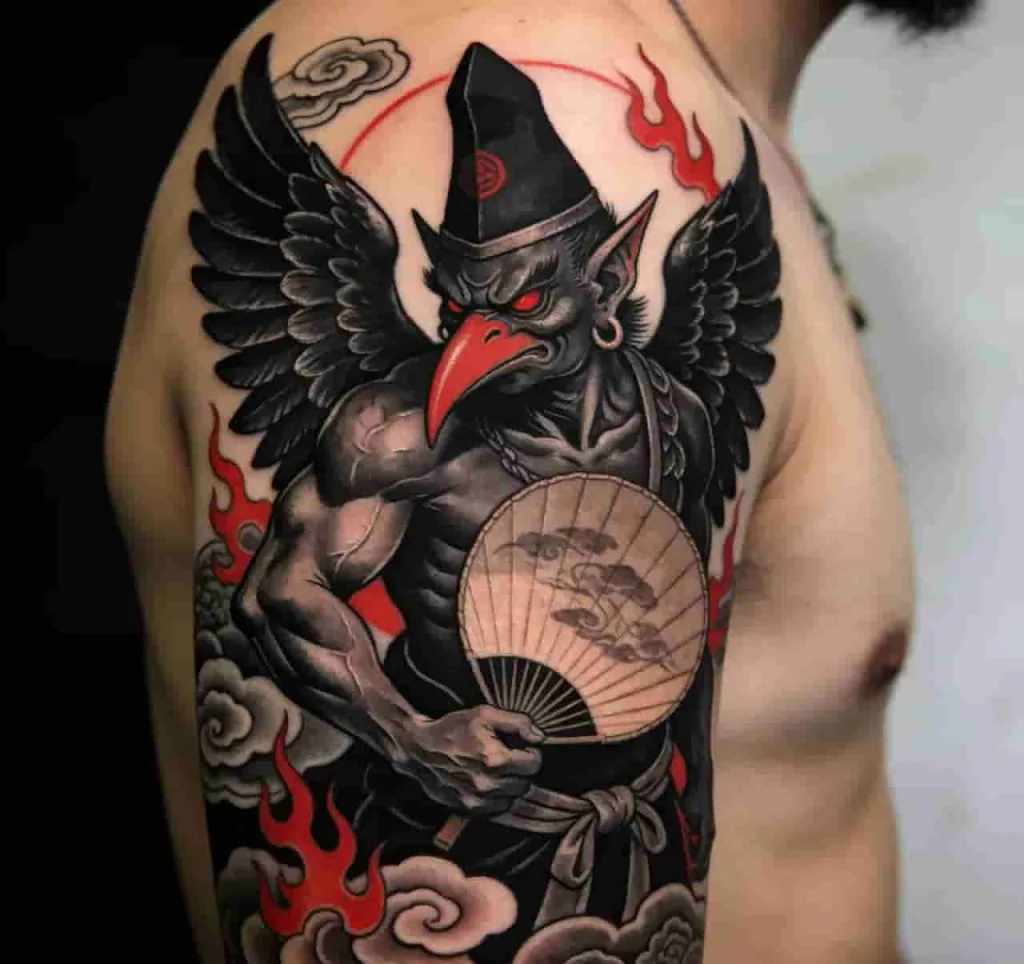
- Crow Tengu (Little Tengu): Resembling ravens with black wings and sharp beaks. They’re more mischievous and bird-like, but still usually shown as following the Great Tengu.
So the meaning represented by choosing one type of tengu versus another actually varies quite a bit.
Tengu Tattoos: More Than Just Aesthetics.
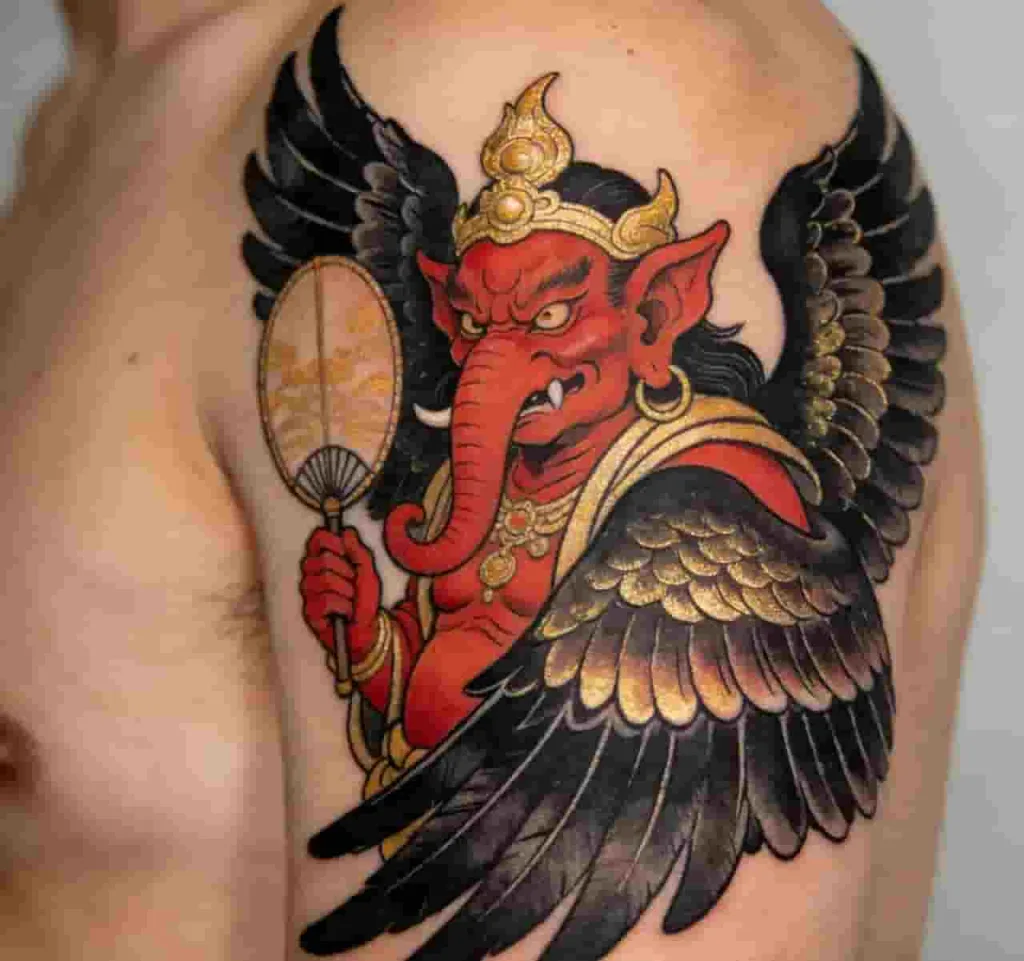
Most people think tattoos are just about style, but that’s not really true. But tengu tattoos are different—they carry multiple layers of meaning. Let’s break it down.
For a lot of people, a tengu tattoo feels like a symbol of warrior spirit.
Legend has it that Minamoto no Yoshitsune, one of Japan’s greatest warriors, learned unparalleled martial arts from the tengu.
So for some people, a tengu tattoo is like a personal promise—to stay brave, disciplined, and a little bit warrior-like in spirit.
Ask yourself honestly: Can I truly handle all these challenges right now?
I might still be far from it, but at least I want to strive in that direction.
Some people even see it as a kind of guardian symbol.
Though tengu sometimes play mischievous tricks, they are actually guardian deities of mountains, forests, and temples. They drive away evil spirits and protect those who practice asceticism.
That’s why some people get tengu tattoos as a kind of symbolic charm—hoping it will keep bad luck and negative energy away.
It also warns you: Don’t get too proud!
This might surprise you. In Buddhist tales, the tengu’s long nose symbolizes “arrogance.”
Legend says those who are self-important and love to show off may become tengu after death.
In a weird way, a tengu tattoo can also work as a personal warning sign:
“Hey, don’t get carried away! Stay humble.”
How true—the line between strength and arrogance is often razor-thin.
To me, the tengu feels like a symbol of living with contradictions.
The tengu is both divine and demonic; it can aid humans or harm them.
It inhabits the “middle ground”—neither wholly good nor wholly evil.
Honestly, I think this is so human. Who among us isn’t up one minute, down the next—sometimes steady, sometimes a total mess? Getting a Tengu tattoo is like quietly admitting: Yeah, I’m complicated, but I’m okay with that.
So which one should you choose?
So it really comes down to your personality: do you like the wise, almost monk-like Great Tengu?
Or the agile and fierce Crow Tengu?
- If you seek inner strength, discipline, and growth, the Great Tengu suits you better.
- If you’re free-spirited, a bit rebellious, and enjoy breaking rules, the Crow Tengu might resonate more.
Some get both—one on the back, one on the arm—embracing both order and adventure.
Finally, a “non-essential but true” observation.
Honestly, just scrolling through tengu tattoo designs is enough to make you want one. But if you get one without understanding its story… well, that’s a waste of this millennia-old myth’s weight.
Conclusion: Tattoos are language, not decoration.
A Tengu tattoo isn’t just some random cool-looking design.
For some, it’s about courage. For others, it’s a reminder to stay grounded. And for many, it’s just a way to honor Japanese mythology.
So next time you see someone with a Tengu tattoo, don’t just say “Wow, that’s cool.”
Ask them: “Why did you choose it?”
The answer might surprise you.
When you think about it, tattoos are basically stories—just written in ink instead of words.
Your story deserves to be told beautifully.
Comment on “Tengu Tattoo Meaning: Symbolism and Japanese Folklore”