Hey, friend. Have a seat and grab a drink of water.
I hear you’re thinking about getting a tattoo of “God”? That’s a big decision. Seriously, don’t rush into it. It’s not just a matter of sticking a few needles in your skin and leaving some ink behind. It’s about carving a promise into your body—a reminder. It’s a constant reminder that there are things in this world greater and more powerful than yourself.
I know the feeling. Back when I first started out, I wanted to get something special too. My head was a mess back then—my thoughts were as numerous as summer mosquitoes, impossible to shoo away. One minute I’d think of this, the next that, and I was completely overwhelmed.
Later, I realized I couldn’t rush it. Haste makes waste, and that’s especially true for tattoos.
I made a decision back then that was a bit silly but worked like a charm. I grabbed a big, ugly spiral notebook and cleared my entire weekend. I tossed my phone far away and even taped cardboard over the window. I just wanted some peace and quiet—no distractions from the outside world. I needed to listen to what my heart truly wanted.
Why Are More and More People Choosing “God” Tattoos?
You see, tattoos of God or deities never go out of style. Why? Because they represent faith and strength. They’re like guides on your life’s journey and a protective shield.
Of course, the specific meaning depends on which deity you choose. Everyone’s idea of a god is different. But some images are universally understood and resonate with everyone. That’s why understanding the meaning of “god” tattoos is so important—it helps you clarify your thoughts.
Meanings and Symbols of Common God Tattoos (What Do Different Gods Represent?)
Let’s casually chat about a few common choices, just like friends talking—no fluff:
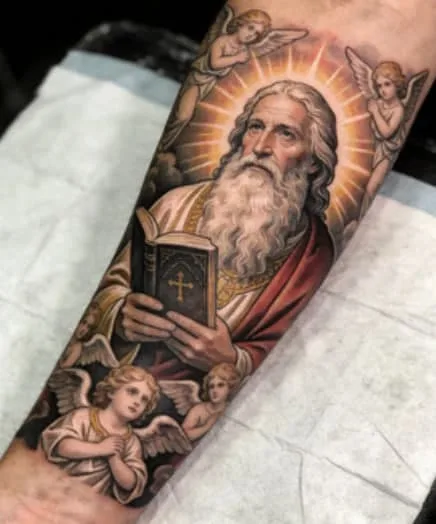
- Guardian Angel: This is your bodyguard. It represents protection, guidance, and a pure heart. Many people like to get angels with wings or holding religious symbols. Looking at it, you feel like someone is watching over you from above.
- Jesus Christ: This is the ultimate expression of love. It symbolizes sacrifice, redemption, and endless forgiveness. It’s often depicted with a cross or a crown of thorns. It reminds you that no matter what happens, love is always there.
- The Virgin Mary: She is the embodiment of maternal love. She represents tenderness, compassion, and the image of a sacred mother. Many mothers, or those who wish to protect their families, choose her.
- Buddha: Looking for inner peace? You can’t go wrong with him. He symbolizes peace, wisdom, and the ability to overcome suffering. He is usually depicted meditating or making specific hand gestures. Just looking at him brings a sense of calm.
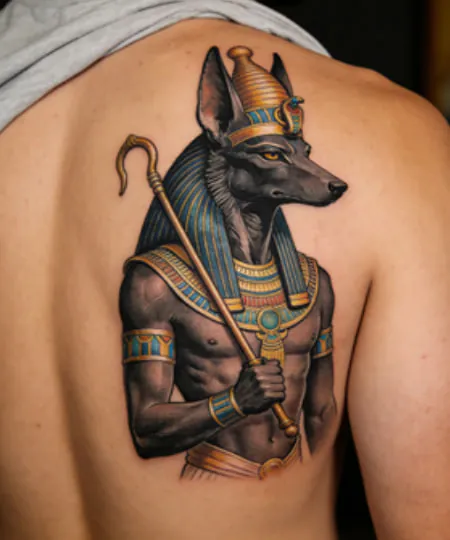
- Anubis: An old friend from Egypt. Although strictly speaking he isn’t what we usually call a “god,” he governs the transition and the afterlife. Many choose him because they believe he can protect the soul and help navigate through difficult times safely.
- Zeus or Odin: These are symbols of power. They rule over storms and the sky, possessing absolute authority. If you want to showcase primal strength and the bearing of a king, they are excellent choices.
Key Elements and Meanings in Religious Tattoos (Details Define Meaning)
Just having a god’s image isn’t enough. The surrounding patterns—those small details—are actually crucial. They make the whole story complete.
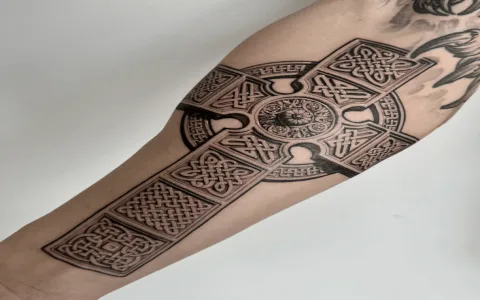
- Cross: This is the core of Christianity. It represents redemption and rebirth.
- Halo or Rays of Light: Notice how deities in paintings always have a glow above their heads? That signifies a divine presence, representing enlightenment and wisdom.
- Chains or Ropes: This is quite interesting. It can symbolize breaking free from bondage through faith, or it can represent the unbreakable bond between you and the divine.
- Scriptures or Prayers: Put the words from your heart directly onto your skin. This is your mantra and your declaration.
Where Is the Best Place to Get a Divine Tattoo? An Analysis of the Symbolism Behind Different Locations
Choosing the right spot makes all the difference. This isn’t decided on a whim—each location has its own significance:
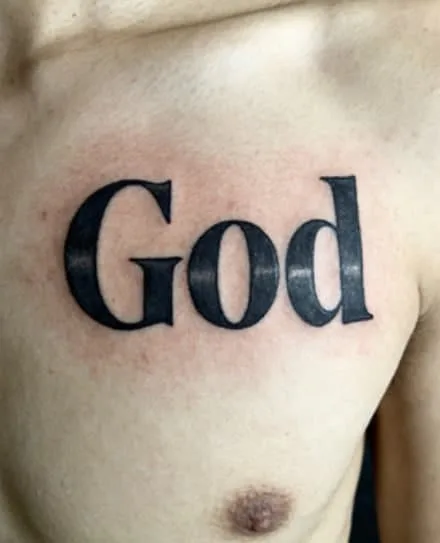
- Chest or Near the Heart: This signifies that faith is at the core of your life. It sits right where your heart beats, representing the most authentic part of you.
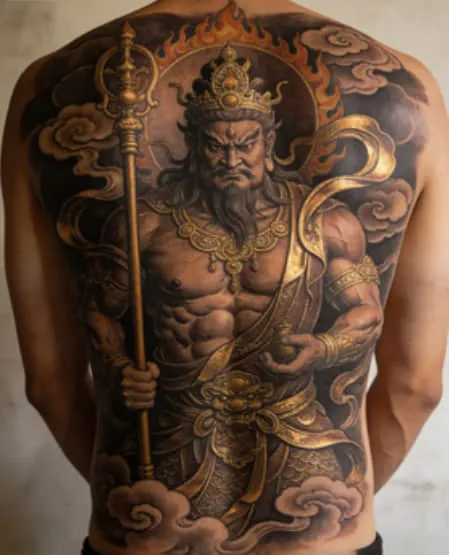
- Back: It’s like having a mountain behind you. This means divine power is always behind you, protecting you and pushing you forward.
- Forearm or Wrist: This is where you’ll see it most often. It means strength and guidance are right at your fingertips, ready to help you tackle life’s challenges at any moment.
How to Choose the Right Divine Tattoo for You? (A Must-Read for Beginners)
Let me share my own story. After spending a week in that small, dark room, I was left with just two or three ideas.
How do you choose? It’s simple. Every morning when I woke up, without overthinking it, which one was the first thing I wanted to see? If it was just to “look cool,” then forget it. I was looking for a design that would touch my heart.
Finally, I took the concept I’d chosen to my tattoo artist. I didn’t just bring a single photo. I brought a notebook filled with stories. I told him what I wanted to express and which journey I wanted to commemorate.
I still remember when I showed him those scribbled notes—he looked at me like I was crazy. But he got it. He really got it.
We spent an hour just talking in the shop. We talked about placement, size, and how to make the design “come alive” on my skin, not just stay as a drawing on paper. Even before the needle touched me, I knew it was going to work. It was a real commitment.
So, my friend, don’t be afraid to go the extra mile. Think it through, talk it out. When you truly understand the meaning behind a “divine” tattoo, that design will naturally appear in your mind.
To be honest, after all these years and seeing so many clients, I still get moved. Every time I see someone walk in with their own story, etching their beliefs onto their skin, I can’t help but think: In this life, you’ve got to have something—something that lets you stand tall even in the dark, right?