What Is the Helm of Awe?
Hey, let me tell you about this super interesting Norse symbol I’ve been digging into lately—the Helm of Awe. You might’ve heard of it or seen it tattooed on someone’s arm. Honestly, at first I just thought it looked cool, but the more I looked at it, the more curious I got: What does this thing actually mean? Is it just for looks, or is there deeper significance behind it?
I kept seeing this symbol on Pinterest and honestly didn’t know what it was at first.
The concept of the Helm of Awe (Old Norse: Ægishjálmr) appears in Norse mythological texts like the Poetic Edda and Völsunga saga, where it is described as a powerful object or magical aura that instills terror in enemies (associated with the dragon Fáfnir). The visual eight-armed stave design commonly seen today, however, originates from post-medieval Icelandic magical grimoires (17th–19th centuries), such as the Galdrabók, rather than the Viking Age itself (793–1066 AD). It primarily symbolizes protection, power, and intimidation.
Simply put, this symbol acts like an ancient talisman. It shields the wearer from danger and instills a sense of security. Moreover, it conveys a feeling of immense strength, as if donning an invisible armor.
What does this tattoo truly signify?
So why would someone choose to ink the Aegishjálmur onto their skin? Truthfully, this tattoo is more than just decoration; it expresses inner strength and an affinity for ancient wisdom. Here are several key meanings:
- Protection and Defense.
The most crucial meaning is protection. This symbol is believed to help the wearer ward off external threats, whether physical harm or mental stress. It acts like a shield, blocking negative energy and ill will. - Fearlessness and Intimidation.
In Norse mythology, the dragon Fafnir possessed the Helm of Awe. This symbol made him fearless and instilled dread in his enemies. Thus, those who bear this symbol often aspire to embody Fafnir’s courage—facing adversity without flinching while commanding others’ respect. - Summoning Inner Strength.
This symbol also helps individuals focus their inner energy. When facing challenges, it fosters calmness and decisiveness, enabling solutions to emerge. In essence, it serves as spiritual support.
Some people get it purely for aesthetics, and that’s totally valid too.
Having said that, have you ever wondered why some people are particularly drawn to such deeply symbolic tattoos? Perhaps you know someone like that?
What Makes the Symbol’s Design Unique?
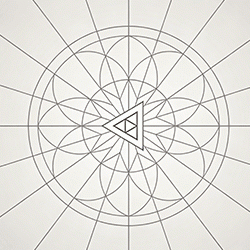
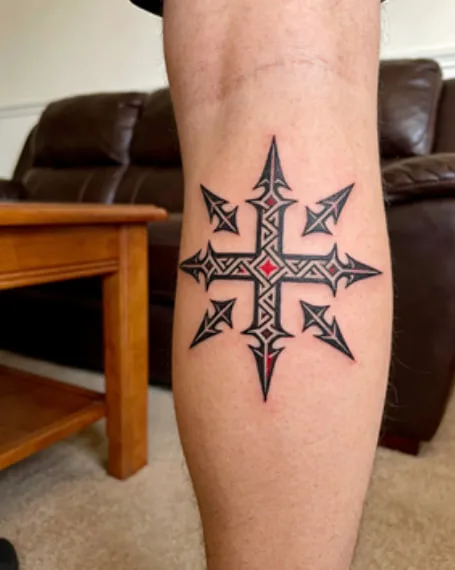
Now, let’s explore the symbol’s design—the most fascinating part! The Helm of Awe features a central point radiating eight “arms.” Each terminates in a trident-like or cross-shaped tip, resembling a compass rose yet more intricate and powerful.
Why this design? Each element carries meaning. The eight “arms” represent protection against evil from all directions. No matter where danger comes from, this symbol shields you. The central point symbolizes the wearer themselves—standing at the very center, fully protected.
I tried sketching this pattern myself and discovered its intricate craftsmanship. Every line flows seamlessly, and the entire design radiates symmetrical beauty and balanced harmony. After completing it, I couldn’t help but exclaim, “Wow, what an amazing design!” It’s both intricate and solid, instilling a profound sense of security.
How do modern people view this symbol?
Of course, the symbol’s meaning has evolved somewhat in modern times. In the past, it was more associated with combat—like striking fear into enemies. Today, however, people use it in a gentler way.
Now, many choose to get the Helm of Awe tattooed because they want to express their inner resilience and strength. Perhaps they’ve faced challenges in life—work stress, emotional struggles, or financial hardships. For them, this symbol serves as a spiritual pillar, helping them overcome these challenges.
I also interviewed artists specializing in Norse-style tattoos. They shared that most clients choose this symbol hoping to find greater security and courage in their lives. While its historical context may be steeped in violence, today it is primarily used to symbolize inner resilience.
Summary
In essence, the Helm of Awe transcends being merely an ancient Norse symbol—it carries profound cultural significance and contemporary value. Whether for self-protection or as an expression of bravery and strength, this tattoo offers unique spiritual support.
So if you’re fascinated by Norse culture or considering a meaningful design, explore the Helm of Awe further. After all, who wouldn’t want an “invisible armor” that empowers you while warding off misfortune?
Oh, and one last question: Do you think this tattoo suits you?
Recommended reading: