I’ve worked in tattoo shops for years and seen all kinds of customers. Over the past year or so, something interesting started happening. Back then, everyone wanted skulls or big lions—they thought that was cool. Now it’s different. More and more people walk in specifically asking for fish tattoos. Last week, I spent an afternoon chatting with an old friend who runs a studio downtown. We watched the customers come and go, each carefully selecting their fish designs. We couldn’t help but wonder: why has everyone—men, women, young, and old—suddenly become so obsessed with inking a fish onto their skin?
Men and women have different tastes in fish designs.
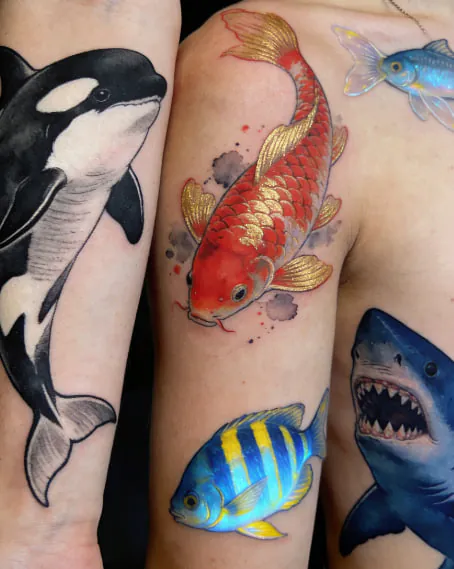
After observing for a while, I noticed significant differences in what male and female clients choose. Most of the guys I meet lean toward bigger, more aggressive-looking fish. For example, massive koi or fierce sharks. They want something that conveys a sense of strength. I remember one guy who got a huge koi tattooed on his bicep. He told me he’d just gone through a tough divorce, and those two years felt like constantly swimming against the current—extremely hard. That fish serves as a reminder to keep swimming forward no matter how tough things get. This captures a crucial aspect of the meaning behind fish tattoos: it’s not just about scales and water, but embodies an attitude of “never giving up.” They want the fish to appear as if defying gravity, brimming with vitality.
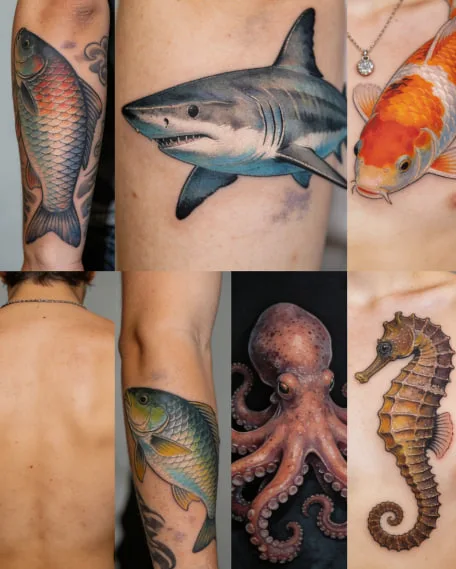
On the other hand, many women who come in ask for something lighter and more fluid. They prefer fish with flowing lines and graceful poses. Betta fish or goldfish are especially popular. For many women, these symbolize beauty and freedom. I met one girl who had two small fish tattooed on her ribs, swimming in a circle around each other. She didn’t share any deep philosophy, just simply said it made her feel balanced inside. The design looked clean, and as she moved, the fish seemed to swim in real motion. That’s the key—fish tattoos aren’t static images. When you flex your muscles, the pattern shifts shape, which is precisely why people love them so much.
Different fish carry different meanings.
People ask me all the time what a fish tattoo is supposed to mean. Honestly, it depends a lot on the type of fish.
- Koi: Take koi, for example. A lot of people see them as powerful and determined. If its head points upward, you’re striving; if downward, you’ve achieved success. Simple logic.
- Shark: Sharks are a different story. Some people get them because they like the idea of being fearless — or at least looking that way. Many rock this design on their calves.
- Goldfish: Typically symbolizes good fortune. More playful than sharks, less fierce, giving a relaxed vibe.
- Betta Fish: Warriors of the water. Their tails are long and beautiful, yet their temper is fierce. Those who choose this design often want to convey a gentle exterior with a strong inner core.
Universal Blessings Behind Fish Tattoos.
Even though the designs are different, I’ve noticed they often circle back to similar ideas. Understanding the meaning of fish tattoos helps you find the perfect fish for your story.
- Perseverance and Strength: A big one is resilience. Fish don’t stop moving — even when the current pushes hard against them. This symbolizes overcoming obstacles and staying true to your path despite challenges.
- Wealth and Good Fortune: In Asian cultures, particularly Chinese and Japanese traditions, fish symbolize prosperity and luck. It signifies abundant blessings in your life.
- Change and Growth: Water is usually tied to emotions. So when someone chooses a fish, it can also hint at personal change or emotional growth — though not everyone thinks that deeply about it. Thus, fish also symbolize personal growth and spiritual healing.
Where to Place It for the Best Effect?
Now here’s the part most people underestimate — placement. This is crucial—I’ve seen too many failed examples. The right spot can make the design look alive. The wrong one? It just looks stuck there. Placing a slender fish on a flat back makes it look like a dead sardine on a plate—lifeless.
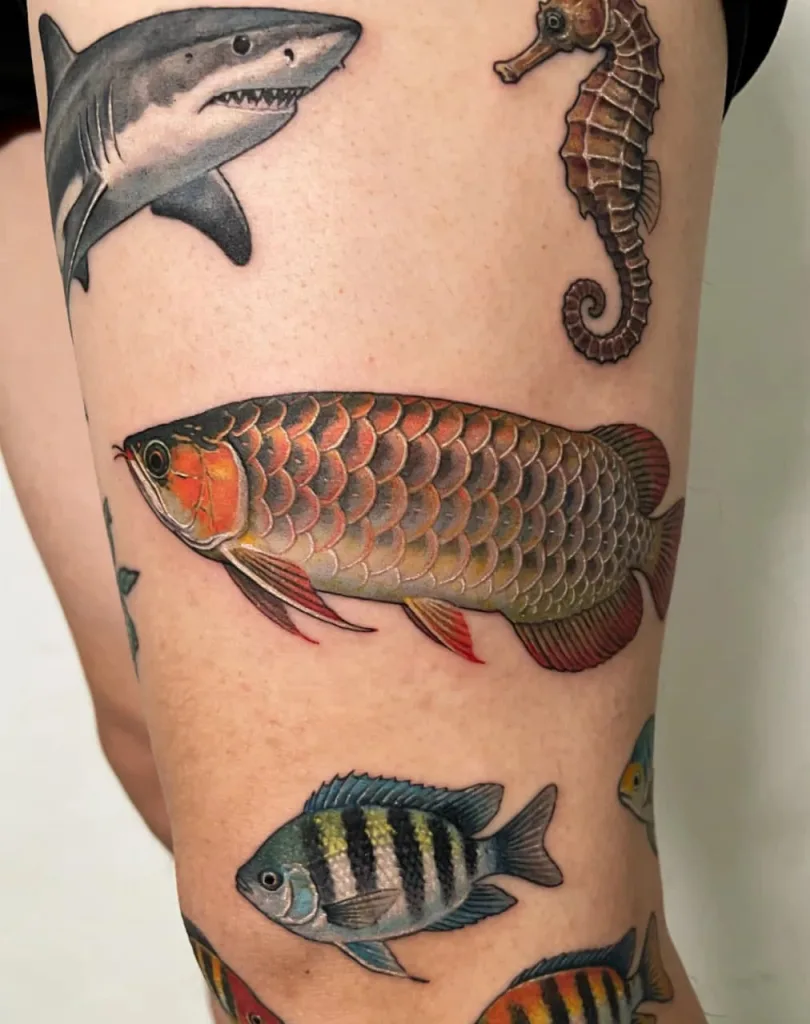
You want the fish to swim along your body’s curves. The forearm is an excellent choice, and wrapping it around the leg works well too. These spots are “golden placements.” When you walk or reach for something, the fish appears to genuinely glide beneath your skin. I always advise clients to avoid placing fish squarely on the center of the chest. Unless you plan to get an exceptionally large fish, smaller ones there look awkward and lifeless.
I vividly recall a client who insisted on placing a small trout right in the middle of his inner thigh. The result looked utterly ridiculous, like a sticker someone forgot to peel off. My artist friend advised him to place it along the side of his calf instead, letting the fish’s tail curve around the bone—that would have looked cool. But he didn’t listen. Three months later, he returned asking to cover it up with another design. Turns out his friends had been teasing him, calling it a “snack fish.”
Tattoos stick around. So yeah, it’s worth thinking twice before committing. Seeing clients leave with satisfied smiles always warms my heart. At the end of the day, it’s not really about the fish. It’s about what it means to the person wearing it.