I’ve always sought a tattoo that’s not just “cool-looking,” but truly meaningful—one that embodies strength and protection. What draws me isn’t the flashy movie adaptations, but the authentic warrior spirit and belief system of Nordic history—that resilience that stands firm amidst storms and fate.
Viking tattoos, deeply rooted in Norse mythology, embody strength, wisdom, and a profound understanding of life’s cycles. Choosing the right symbol isn’t merely decorating your body; it’s etching a belief into your skin.
Core Viking Symbols and Their Meanings.
Mjölnir (Thor’s Hammer).
More than just Thor’s weapon, it’s a sacred talisman. It symbolizes divine protection, unwavering conviction, and the strength to never back down in adversity. Today, it remains a top choice for many—timeless and brimming with energy.
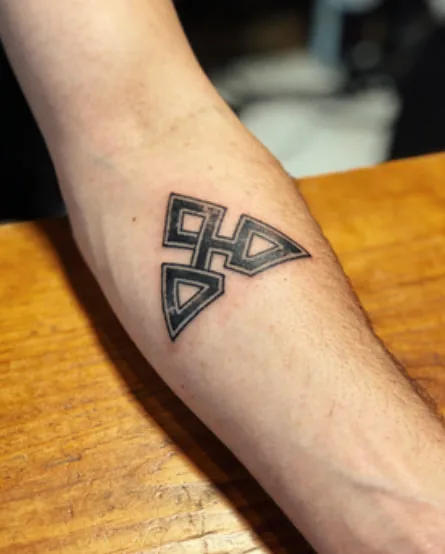
Valknut.
Composed of three interlocking triangles, it’s often associated with Odin and the fallen warriors (Einherjar). It transcends mere death, expressing acceptance of the transition between life and death and the soul’s journey to Valhalla.
Yggdrasil.
This mighty ash tree connecting the Nine Worlds symbolizes cosmic order. It reminds us of universal interconnectedness, where knowledge and destiny intertwine, and creation and destruction are two sides of the same coin.
Vegvísir.
Known as the “Runic Compass,” it was not a widely used ancient symbol but is highly revered in modern Norse culture. It signifies never losing one’s way in fog or adversity—even when the path ahead is unknown, the heart can still guide the way home.
Ægishjálmur.
The “Helm of Awe” is not a physical helmet but a spiritual shield. Legend holds warriors painted it upon their foreheads before battle to intimidate foes and protect themselves. It embodies inner fearlessness and spiritual inviolability.
Runes.
Individual runes from the Elder Futhark carry profound meanings. For instance, Uruz (the bull) symbolizes primal strength and resolve, while Ansuz (Odin’s rune) connects to wisdom, communication, and divine revelation. Choose based on personal experiences or aspirations.
Tattoo Placement Recommendations: Let Symbols Speak to Your Body.
Tattoo placement impacts both visual impact and symbolic resonance. Larger designs require space, while smaller symbols suit more private areas—the key lies in “what it means to you.”
- Chest / Upper Back.
Ideal for grand themes like the World Tree or the Longship. The chest, close to the heart, symbolizes guarding your core; the upper back, bearing the weight of the world, echoes Yggdrasil’s cosmic burden. - Forearm / Biceps.
High-visibility zones perfect for Thor’s Hammer or the Valknut. Each raised arm becomes a reminder of your strength—not for show, but for affirmation. - Shoulder / Deltoid.
Circular or symmetrical designs (like Ægishjálmur or Vegvísir) harmonize exceptionally well here. Shoulders bear weight and symbolize responsibility; these symbols become invisible armor. - Lower Leg / Thigh.
Ample vertical space suits narrative designs—Ragnarök scenes, Fenrir the wolf, or winding dragon-shaped knots. As you walk, the story flows with you. - Ribs / Flank.
A private, sensitive area suited for highly personalized rune sequences or small symbols. They exist not to please others, but to whisper to oneself with each breath.
Recommended Design Styles: Balancing Tradition and Modernity.
Viking tattoos aren’t solely defined by “rough” aesthetics. Your choice of style determines whether symbols speak to you through ancient echoes or contemporary language.
- Norwegian Urnes Style.
Originating from 11th-century wood carvings, it features intertwined serpents, dragons, and crisscrossing vines. Fluid yet taut lines emphasize historical authenticity, perfect for those seeking cultural depth. - Blackwork & Stippling.
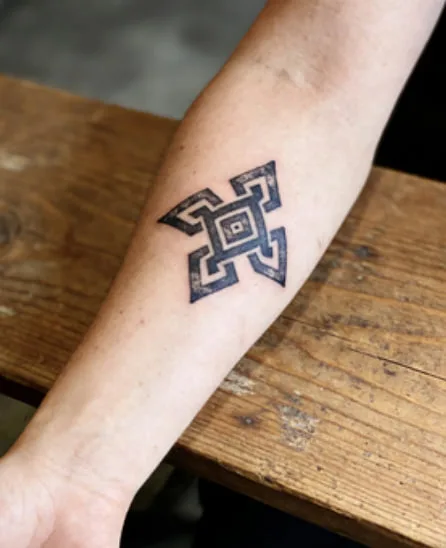
Utilizing deep black ink or dense dot patterns to create depth, this technique imbues symbols with a quiet, ancient, and even mystical aura. It’s particularly suited for geometric talismans like the Ægishjálmur. - Black & Grey Realism.
For vivid depictions of Odin’s single eye, the serpent Jörmungandr, or the intricate details of Viking ships cutting through waves, this style delivers powerful visual impact while preserving mythical solemnity. - Geometric / Line Art.
Reconstructing symbols like the Valknut or Vegvísir with clean, sharp lines strips away complexity to highlight structural beauty. Ideal for those who appreciate modern aesthetics yet remain connected to the core of Norse spirituality.
Ultimately, I got these symbols tattooed not to dress up as a Viking warrior, but because they speak for me what words cannot—the craving for strength, the fear of being lost, the belief in some eternal connection.
Each time I raise my arm and see Thor’s hammer on my forearm, or catch a glimpse of the silent Valkyrie on my shoulder in the mirror, it feels like receiving a letter from the past: a reminder that even in the most chaotic days, I must not lose my way; even when alone, I am never truly solitary.
These tattoos are not adornments, but a pact I made with myself—to live with clarity and backbone, even when the world rocks like the North Sea’s waves.

Comment on “The Meaning of Viking Symbol Tattoos: Nordic Strength, Protection, and Warrior Faith.”